
Track Prep for 2027: A Stiffer Front Anti-Roll Bar and Chassis Brace for My Lotus Elise
My car is a 2016 Lotus Elise S3 with the 1.6 Toyota 1ZR engine, in Ardent Red. It's my track car as well as my weekend car, and this summer I started getting it ready for the 2027 season with two upgrades to the front end: a stiffer adjustable front anti-roll bar and a front chassis brace, both from EliseParts.
I fitted both on the same day in July, on the drive, with the car on axle stands. Here's what each part does, why I bought them together, and how the job went.
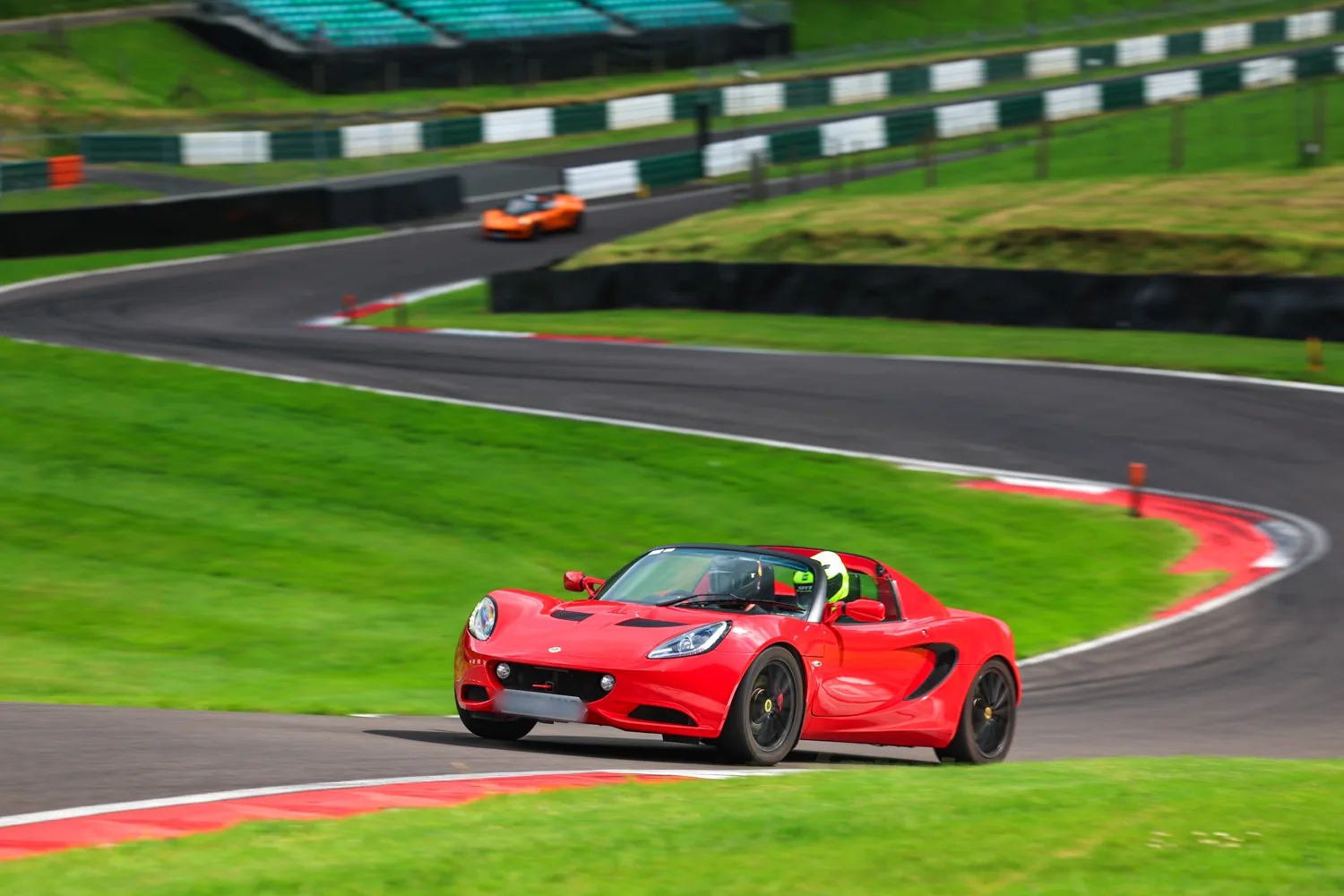
On track in May, before the upgrade. Photo: James Roberts.
The Two Parts
| Part | Price (ex VAT) | Key details |
|---|---|---|
| Stiffer Front Adjustable Anti-Roll Bar | £199.95 | 7/8″ sprung steel bar (standard is 3/4″), adjustable from 1.75 to 2.25 times as stiff as standard, with two new Nylatron bushes |
| Front Chassis Brace Bar Assembly | £249.00 | Laser-cut steel, zinc and black powder coated, with Geomet-coated bolts and stainless washers |
Prices are from the EliseParts website at the time of writing.
Why a Stiffer Front Anti-Roll Bar
The anti-roll bar links the left and right front wheels. When the car leans in a corner, the bar twists and resists the lean. A stiffer bar means less body roll at the front and a car that changes direction more sharply, which is what you want on a circuit.
The EliseParts bar is adjustable. Moving the drop links closer to or further from the centre of the bar changes how stiff it is, so I can start in one position and change it once I've driven it on track, rather than committing to one setting up front. I've started on the stiffest setting, 2.25 times as stiff as standard.
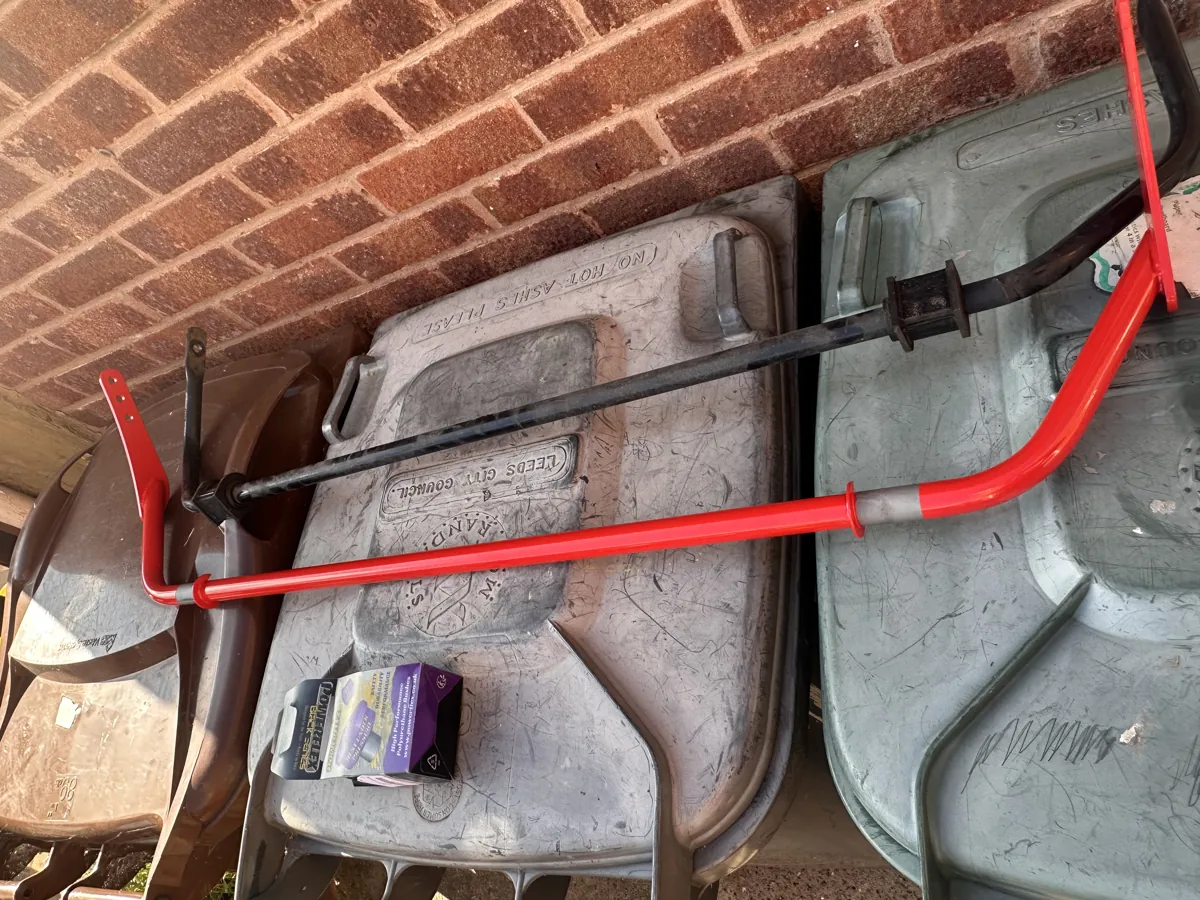
The original bar (black) next to the new 7/8″ adjustable bar (red).
Why the Chassis Brace Goes With It
A stiffer bar puts more load through its mounts. EliseParts say the later anti-roll bar mounts are a weak point on the front of the chassis, and they recommend the brace alongside their bar for exactly that reason. It bolts across the front of the car and ties the mounts together, so the extra load goes into the structure rather than flexing the mounting points.
Buying the bar without the brace would have saved £249, but it would have meant asking the weakest part of the front end to take more load. On a car I plan to drive hard on track, that didn't seem like a sensible saving.
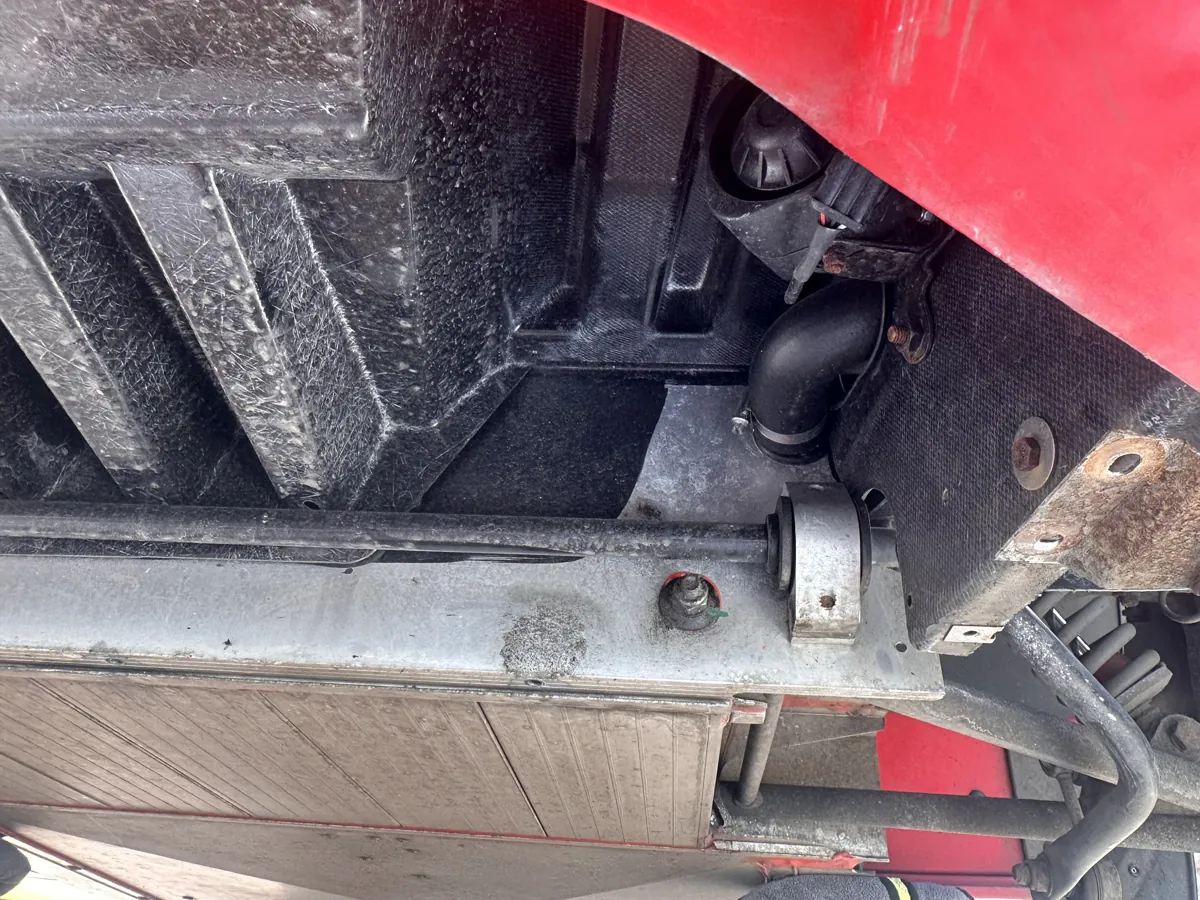
The original bar and mount before I started, with ten years of road grime and surface rust.
Fitting It
I did the whole job in an afternoon on the drive. The rough order:
- Car up on axle stands and the front wheels off.
- Front undertray off to get to the anti-roll bar and its mounts.
- Old bar out: drop links undone, mounts unbolted, bar removed.
- Brace in, following the EliseParts fitting guide, which you can download from the product page.
- New bar in with its new bushes, drop links reconnected.
- Everything torqued up, undertray back on, wheels on and the car back on the ground.
EliseParts say the bar on its own takes about an hour. With the brace as well, it took me most of the afternoon.
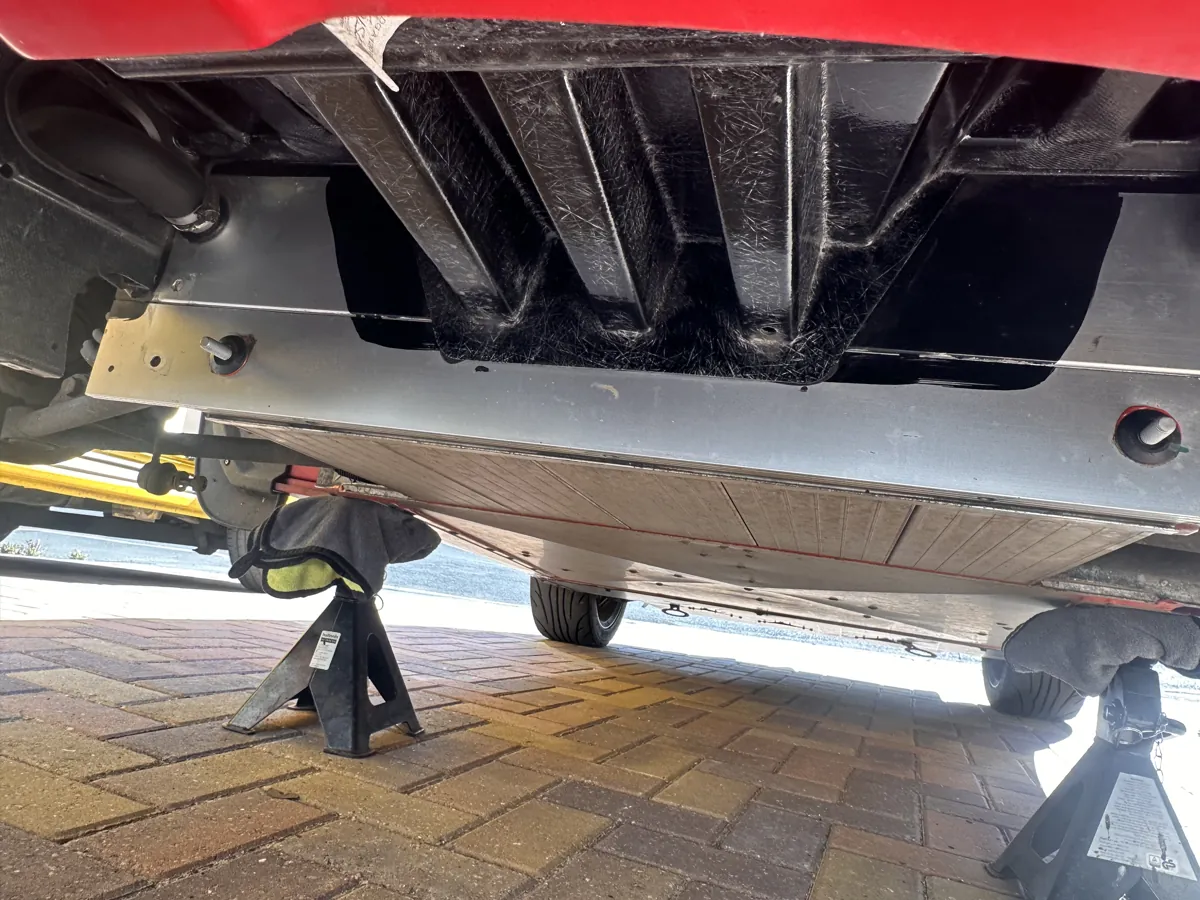
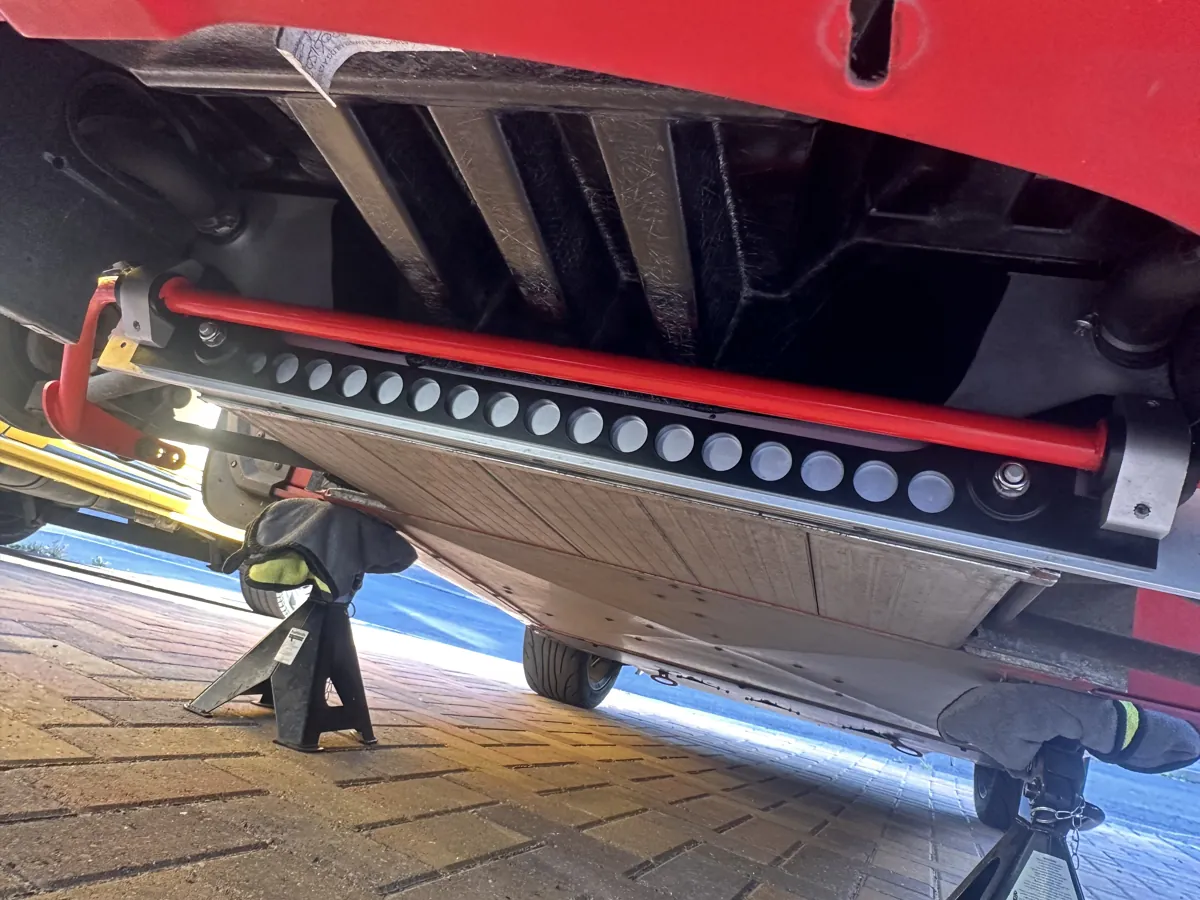
Before and after: the front of the car with nothing fitted, then with the brace and the new bar in place.
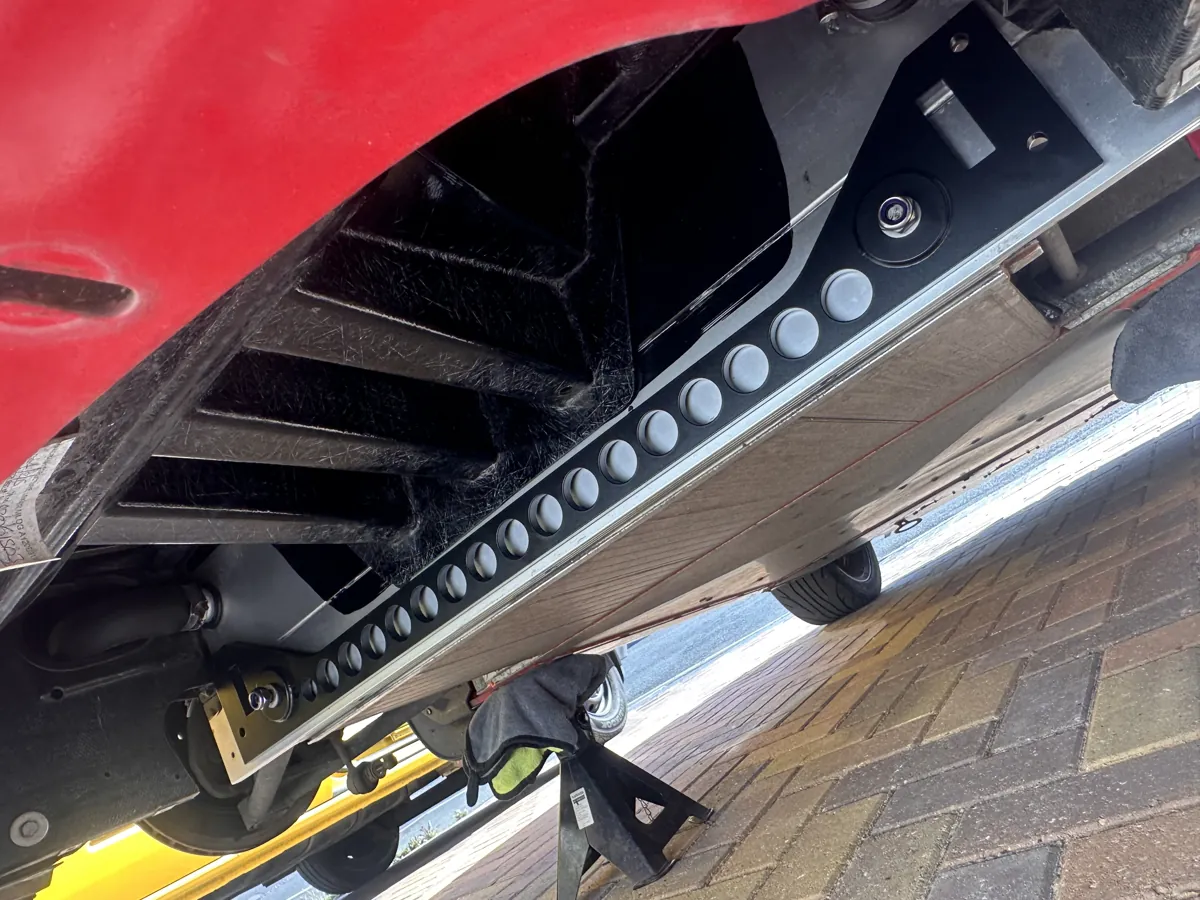
The brace bolted across the front of the car.
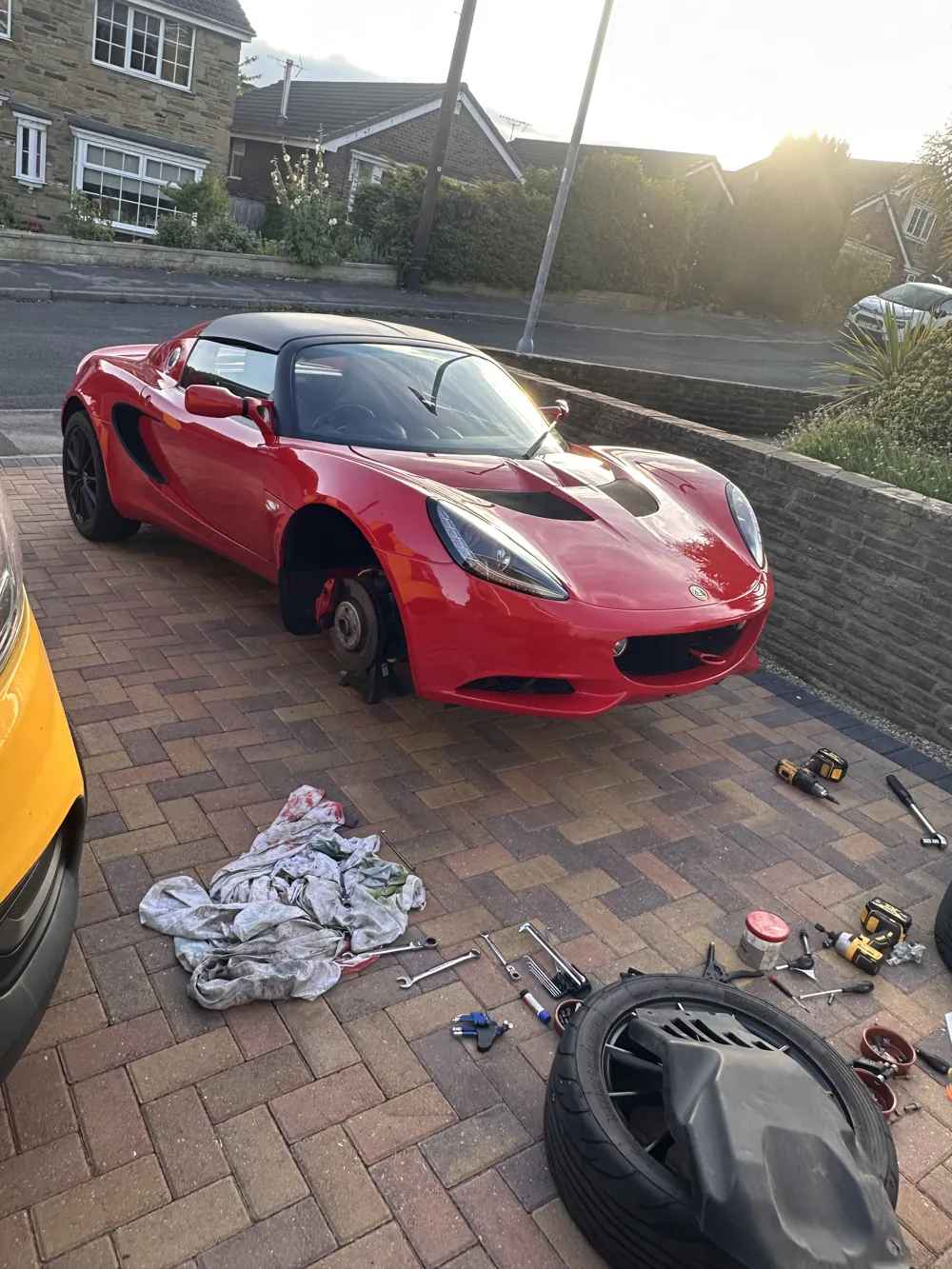
Mid-job on the drive.
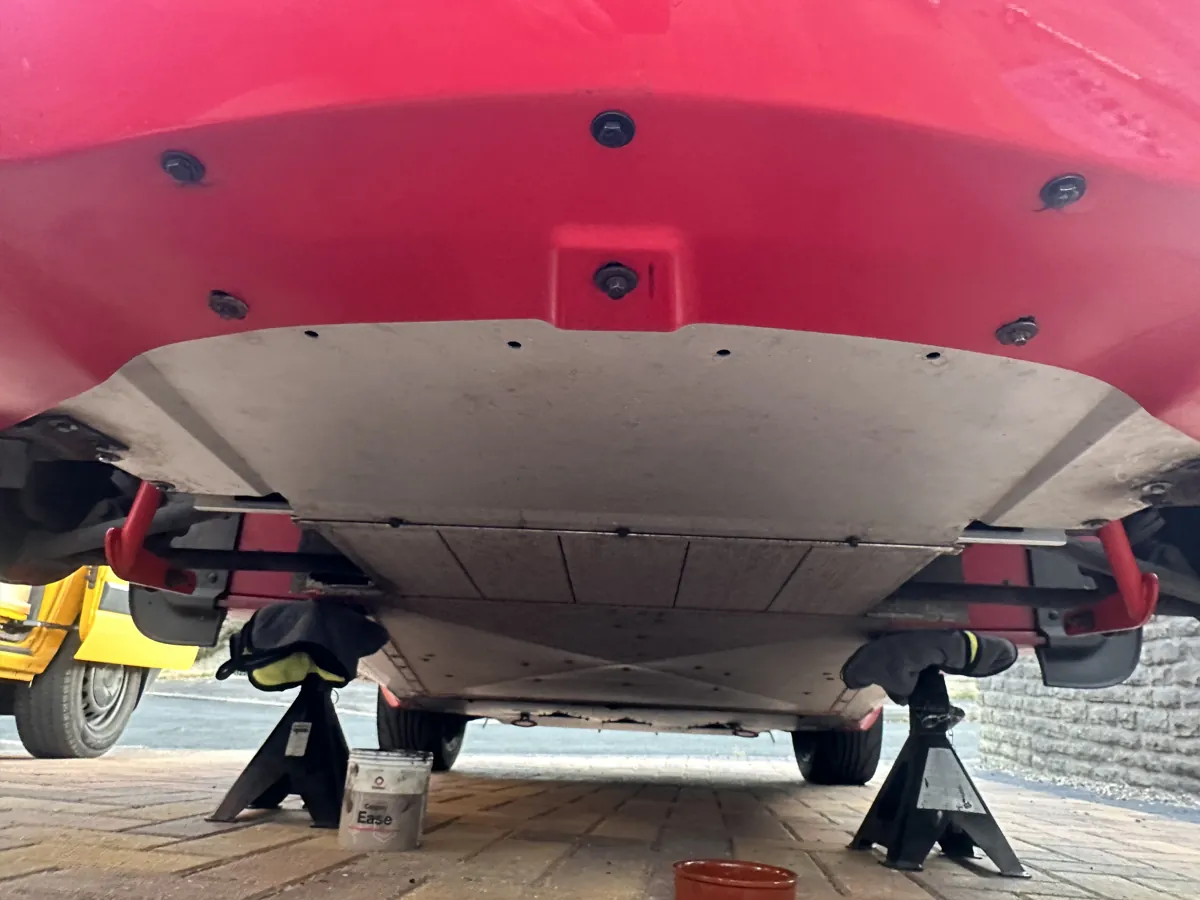
The undertray back on at the end.
How It Drives So Far
On the road the difference is obvious. The car is a lot more responsive, and at speed it goes exactly where you point it. That's what a stiffer front bar should do: with less body roll at the front, the car reacts to the steering straight away instead of leaning first.
The trade-off to watch for is understeer. A stiffer front bar puts more of the cornering load on the front tyres, so at the limit the front can let go sooner and the car can push wide, especially in slow, tight corners. You won't find that on the road. You will on a track.
What's Next
The real test is a track day, and that's coming in 2027. If the stiffest setting pushes wide mid-corner, I'll soften it a step and try again, which is the point of buying an adjustable bar. I'll add how it went here.
While the car was apart I also noticed how much surface rust had built up on the steel suspension parts. Two weeks later I went back and dealt with it properly before winter: rust treatment, ACF-50 and a deep clean.
If you're planning the same upgrade on your Elise and want to compare notes, drop me a message.